


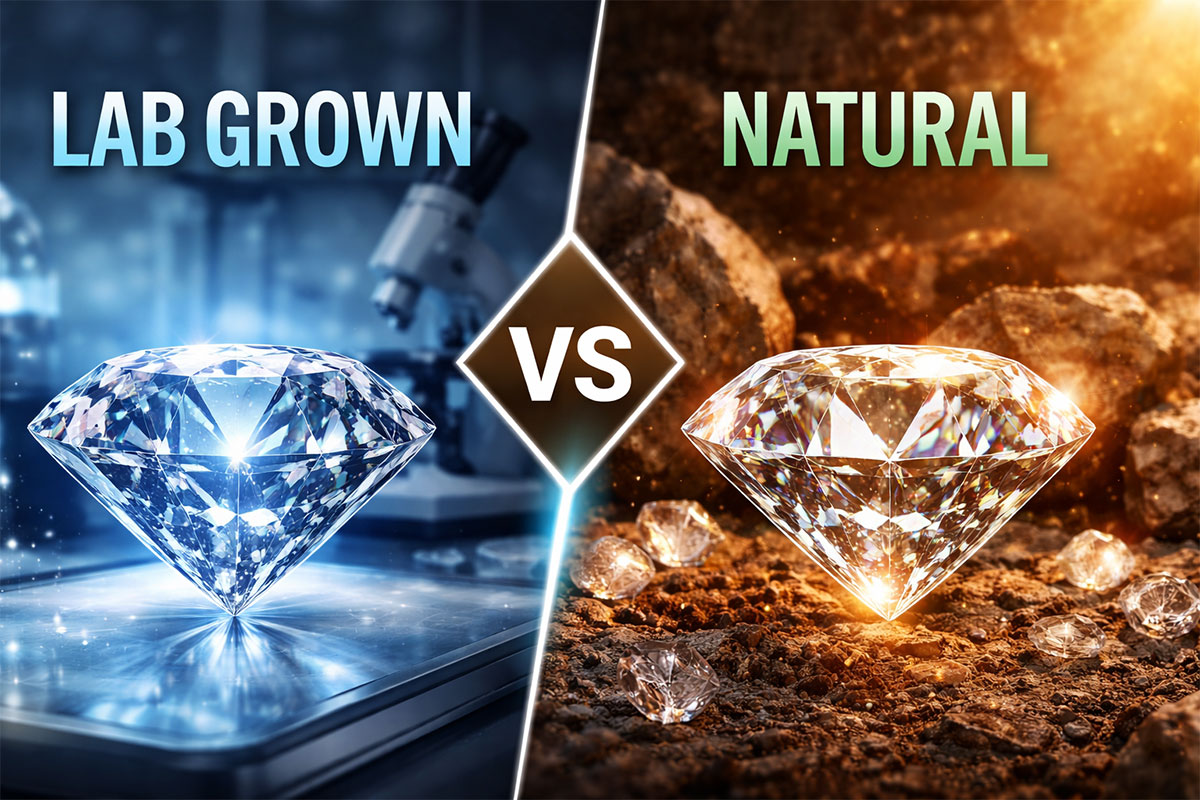
Lab-Grown vs Natural Diamonds: Which Is Better for Buyers?
Lab-Grown Diamond vs. Natural Diamond—What Should Consumers Buy?
It has become difficult for diamond consumers to choose from different sources due to changes within the diamond industry. Most people now have to weigh the advantages of a lab-grown diamond against those of a natural diamond. Both types of diamonds have certain similarities, but there are significant differences between them.
To ensure that exporters and wholesalers choose the best products available in the market, they need to know what these two types of diamonds entail.
Definition of a Lab-Grown Diamond
- Lab grown diamonds are artificially created through high-end technology in laboratories. These diamonds include the following types:
- High Pressure High Temperature (HPHT) Chemical Vapor Deposition (CVD)
Scientists use carbon atoms to produce genuine diamonds through both techniques. The resultant diamonds can match the qualities of natural diamonds in terms of hardness and brilliance.
Definition of a Natural Diamond
Natural diamonds are formed by nature millions of years ago in the deep regions of the earth. Carbon converts into diamond crystals under pressure. These diamonds undergo processing after mining.
Lab Grown Diamonds vs. Natural Diamonds: The Main Difference
- Source
- Lab grown diamonds are grown in laboratories. Natural diamonds develop underground. - Cost
- Lab grown diamonds usually have prices 30–50% lower than those of natural diamonds. That is why most customers choose lab grown diamonds for large purchases. - Visual Appeal
- Lab grown diamonds and natural diamonds look exactly the same. Only experts can distinguish between them without additional tools. - Eco-Friendliness
- Lab grown diamonds generally require fewer mining activities. They thus attract environmentally friendly consumers. - Resale Value
- Most natural diamonds have higher resale value due to their traditional image. Lab grown diamonds emphasize affordable pricing and bulk sales.
What Kind of Diamond Is Good for Exporting?
It all depends on your target audience:
Select lab grown diamonds for budget-conscious clients
Select natural diamonds for high-end clients
Provide both types of diamonds to cater to different needs
Today, many exporters offer both varieties.
Advantages of Lab Grown Diamonds for Exporters
- Low cost of procurement
- Quick production delivery
- Uniform product quality
- Increasing worldwide demand
- More sizes available
Advantages of Natural Diamonds for Exporters
- Classic luxury image
- Strong brand identity
- Jewelry market demand for high-quality products
- Long-lasting value perception
Market Trend: Increasing Demand for Lab Grown Diamonds
Global consumers are favoring lab grown diamonds. The retailers find it appealing due to lower costs. Moreover, the younger generation is focused on sustainability. Therefore, exports of lab grown diamonds are rising.
| Feature | Lab Grown | Natural |
|---|---|---|
| Origin | Laboratory | Earth |
| Price | Lower | Higher |
| Appearance | Same | Same |
| Sustainability | Higher | Lower |
| Rarity | Less rare | Rare |
| Export Demand | Growing fast | Stable |
Conclusion
There is plenty of potential for both types of diamonds. If one knows what is required by the market, he will get maximum benefits. For affordability and quantity, lab-grown diamonds have an edge. But natural diamonds cannot be matched in high-quality products.
Many exporters have both types of diamonds in their range for optimal performance.
Leave a Comment
Your email address will not be published. Required fields are marked *